
Image Bearers of Jesus
We are made in His Image, before we do anything else, Scripture tells us who we are. In the beginning, God made a decision that set humanity apart from every other created thing:
“And God said, Let us make man in our image, after our likeness: and let them have dominion over the fish of the sea, and over the fowl of the air, and over the cattle, and over all the earth, and over every creeping thing that creepeth upon the earth. So God created man in his own image, in the image of God created he him; male and female created he them” - Genesis 1:26-27
The Hebrew word for "image" is "tselem" (צלם) — it speaks of a representation, a stamped likeness, something that reflects the one who made it. To carry the tselem of God is not a small thing. It means our lives are meant to reflect Him — His character, His heart, His nature — everywhere we go.
This is why sincerity matters so much in how we live. If we carry God's image, we also carry His name into every room we enter. Apostle Paul said:
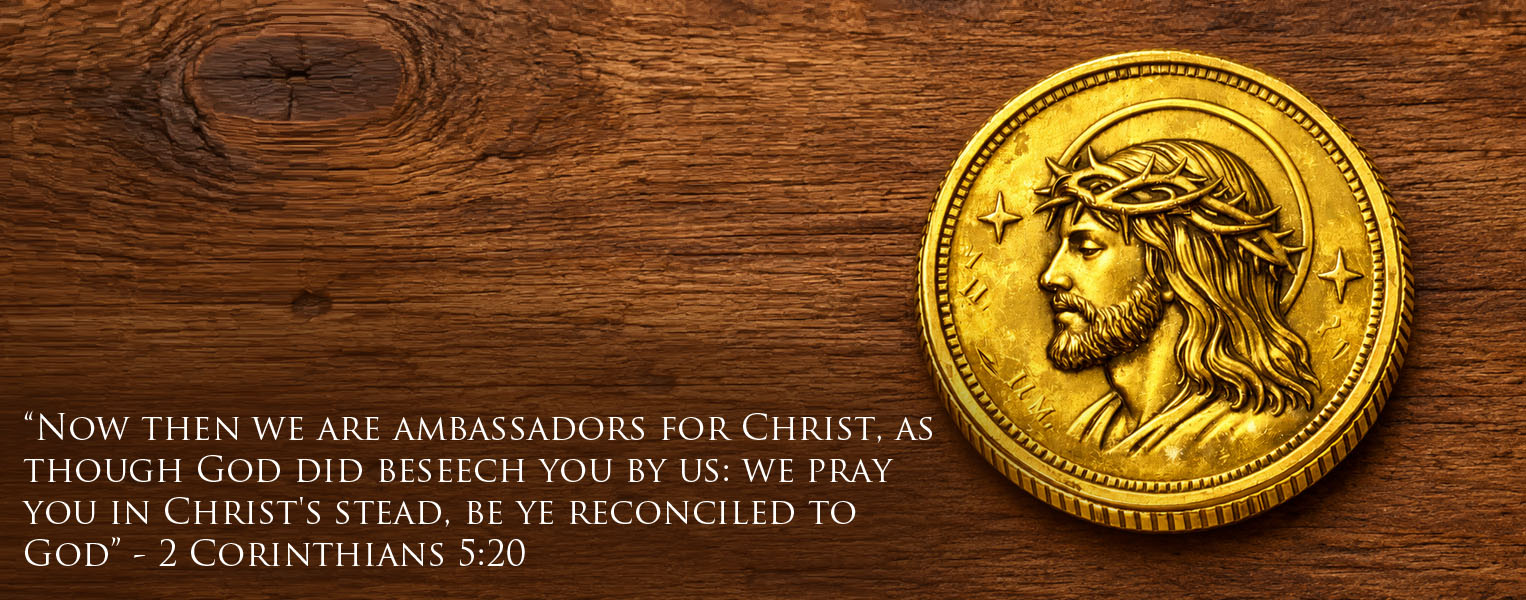
“Now then we are ambassadors for Christ, as though God did beseech you by us: we pray you in Christ's stead, be ye reconciled to God” - 2 Corinthians 5:20
An ambassador does not represent himself. He represents the one who sent him. Every word, every reaction, every decision either honors or misrepresents the King we serve.
Because we are made in God's image and adopted as His own, we don't walk into our days empty-handed. We carry:
- His Wisdom — "If any of you lack wisdom, let him ask of God, that giveth to all men liberally... and it shall be given him." (James 1:5)
- His Grace — "And God is able to make all grace abound toward you." (2 Corinthians 9:8)
- His Favor — "For thou, LORD, wilt bless the righteous; with favour wilt thou compass him as with a shield." (Psalm 5:12)
- His Strength — "I can do all things through Christ which strengtheneth me." (Philippians 4:13)
- His Presence — "Fear thou not; for I am with thee: be not dismayed; for I am thy God." (Isaiah 41:10)
These are not abstract ideas — they are the resources God has already placed in us because His image and His Spirit dwell within us.
Carrying His image is tested most clearly not when life is easy, but when we are mistreated. The natural instinct is to strike back — to defend ourselves, to "even the score," to become judge, jury, and executioner in our own case. But Scripture calls us to something higher. The Bible says:
“Recompense to no man evil for evil. Provide things honest in the sight of all men. If it be possible, as much as lieth in you, live peaceably with all men. Dearly beloved, avenge not yourselves, but rather give place unto wrath: for it is written, Vengeance is mine; I will repay, saith the Lord” - Romans 12:17-19
“Not rendering evil for evil, or railing for railing: but contrariwise blessing; knowing that ye are thereunto called, that ye should inherit a blessing” - 1 Peter 3:9
To take justice into our own hands is, in effect, to try to sit in God's seat. But He alone knows the full truth of every heart, and He alone judges rightly. The Bible says:
“The LORD shall judge the people: judge me, O LORD, according to my righteousness, and according to mine integrity that is in me” - Psalms 7:8
Our calling is not to retaliate but to release the situation into God's hands — trusting His timing and His justice over our own. That doesn't mean silence or passivity in the face of real wrongdoing; it means we stand for truth guided by discernment rather than by anger. The Bible says:
“Get wisdom, get understanding: forget it not; neither decline from the words of my mouth” - Proverbs 4:5
“The simple believeth every word: but the prudent man looketh well to his going” - Proverbs 14:15
Engaging People Wisely — Especially in Hostile Situations:
Bearing God's image doesn't mean we go silent when confronted; it means we let the Holy Spirit lead how we engage. Jesus himself modeled this — He rarely opened with an explanation. He often answered a question with a question, discerning the heart of the one in front of Him before responding:
“But Jesus perceived their wickedness, and said, Why tempt ye me, ye hypocrites?” - Matthew 22:18
1. Ask before you explain. Before defending yourself or unpacking truth, ask simple, sincere questions to understand who you're dealing with:
- Is there a particular reason you're asking me this?
- What is your own take on this?
This isn't evasion — it's discernment. "The heart of the righteous studieth to answer" (Proverbs 15:28). A hasty answer often misses the real issue.
2. Test for a teachable heart. When someone accuses or criticizes you, discern first whether they are sincere and open to correction, or whether their mind is already made up:
“A scorner loveth not one that reproveth him: neither will he go unto the wise” - Proverbs 15:12
“Reprove not a scorner, lest he hate thee: rebuke a wise man, and he will love thee” - Proverbs 9:8
A teachable person listens and weighs what you say. Someone determined to tear you down will rarely hear you out — no matter how well you speak.
3. Know when to stop. Jesus warned against pouring truth into ground that will only trample it:
“Give not that which is holy unto the dogs, neither cast ye your pearls before swine, lest they trample them under their feet, and turn again and rend you” - Matthew 7:6
Endless arguing with someone who has already decided against you is not faithfulness — it's wasted stewardship of your time, words, and peace. Sometimes the most Spirit-led response is a gracious silence or a simple walking away. The Bible says:
“Answer not a fool according to his folly, lest thou also be like unto him” - Proverbs 26:4
4. Let patience uncover the truth. Instead of reacting immediately, ask calm, clarifying questions that let the situation reveal itself:
- How do you know that?
- Who or where did you hear that from?
- How did you come to that conclusion?
The Bible says:
“Wherefore, my beloved brethren, let every man be swift to hear, slow to speak, slow to wrath” - James 1:19
Patience is not weakness; it is discernment given room to work.
5. Rely on the Holy Spirit, not your own reflexes. None of this is a formula to master on our own strength. It is the Spirit who searches hearts, gives words in the moment, and produces the fruit needed to respond rightly:
“But when they deliver you up, take no thought how or what ye shall speak: for it shall be given you in that same hour what ye shall speak. 20 For it is not ye that speak, but the Spirit of your Father which speaketh in you” - Matthew 10:19-20
“But the fruit of the Spirit is love, joy, peace, longsuffering, gentleness, goodness, faith, 23 Meekness, temperance: against such there is no law” - Galatians 5:22-23
“Howbeit when he, the Spirit of truth, is come, he will guide you into all truth: for he shall not speak of himself; but whatsoever he shall hear, that shall he speak: and he will shew you things to come” - John 16:13
In hostile moments, the ambassador's job is not to win the argument but to represent Christ well — and that requires leaning on the Spirit's leadership rather than our own instinct to defend, correct, or retaliate.
Living it out
To carry God's image well is a daily choice:
- Remember who you represent before you react.
- Draw on what you carry — His wisdom, grace, favor, strength, presence — instead of your own limited resources.
- Release judgment to God when wronged, and ask Him for discernment on how (or whether) to respond.
- Ask before you explain, testing whether the person before you has a teachable heart.
- Know when to walk away, refusing to cast what is holy before those determined to trample it.
- Lean on the Holy Spirit in the moment, trusting Him to give the right words, the right timing, and the right restraint.
We are not merely trying to behave well. We are representing the One whose image we bear.