Failure is not Final
Failure has a way of shrinking us. A setback, a disappointment, the loss of someone we love — and almost instinctively, the question rises: "Where is God?" It's telling that even those who don't believe in Him ask this question in their darkest hour. Something in the human heart knows that failure was never meant to be the final word.
If you're reading this while nursing the sting of a mistake, a missed opportunity, or a public stumble, this article is for you. We're going to walk from the fear that failure creates, toward something far better: a bold, settled trust in God, that lets you live at rest, even when life hasn't gone the way you planned.
Before we go any further, one truth has to be settled: God's love for you does not rise and fall with your performance. We are not loved because we succeed. We are loved because we are washed in the precious Blood of His Son, Jesus Christ, and brought into an unbreakable Blood Covenant with Him. His love isn't a wage we earn — it's a gift secured by the finished work of Christ. Whether you are at your best or at your worst, the Father's love for you does not fluctuate. The cross is the permanent, unmovable proof of that. The Bible says:
"For God sent not his Son into the world to condemn the world; but that the world through him might be saved" — John 3:17
"...God was in Christ, reconciling the world unto himself, not imputing their trespasses unto them..." — 2 Corinthians 5:19
So when we fail, God is not distant, disappointed, and waiting to withdraw. He is near. He never leaves us nor forsakes us (Hebrews 13:5). Failure feels like abandonment — but it is precisely there that Grace is closest.
Failure is loud. It talks constantly, and what it says is not true: "You always mess up." "God is done with you." "You've disqualified yourself." Feelings are real, but they are not reliable narrators of truth. Scripture says:
"Faith cometh by hearing, and hearing by the word of God" — Romans 10:17
This is why the Bible, and not our emotions, has to be the lens we interpret our failures through. Let's look at a man who failed publicly — and what God's Word shows us about how the story really ended.
We see this vividly in the life of King David. In 2 Samuel 6, David sets out to bring the Ark of the Covenant into Jerusalem — a beautiful, well-intentioned desire. But he transports it on a new, man made cart, driven by oxen, instead of having it carried on the shoulders of the Levites as God had commanded in the Scriptures. When the oxen stumble, a man named Uzzah reaches out to steady the Ark and dies instantly.
Imagine what went through David's mind: "Why did God do this? Did I not do the right thing? What will the people think of God now?" This was a public, painful failure — and it was avoidable. King, David was required to personally know and rule by God's Law. The Bible says:
"And it shall be, when he sitteth upon the throne of his kingdom, that he shall write him a copy of this law in a book out of that which is before the priests the Levites" — Deuteronomy 17:18
The bullock cart was a picture of human effort — a good idea done the wrong way. Uzzah's name even means "strength", a subtle picture of human strength attempting to do what only consecrated Grace can do. The Levites, by contrast, carried the Ark under the Blood Covenant — a picture of Grace, not works.
But notice what happens next. The Ark of the Covenant rests for three months in the house of a man named Obed-Edom, a Gentile from Gath — the very hometown of Goliath whom king David slew. Obed-Edom's name means "servant of the blood", and Scripture tells us his household was greatly blessed simply because the Ark of the Covenant was there. When king David heard this, he didn't give up. He went back to Scripture, corrected his approach, and had the Levites carry the Ark on their shoulders exactly as commanded — sacrificing an offering every six steps in worship and gratitude. The Bible says:
"For because ye did it not at the first, the LORD our God made a breach upon us, for that we sought him not after the due order" — 1 Chronicles 15:13
God did not discard David because of his failure. He corrected him, restored him, and kept working through him. That same King David — flawed, imperfect, capable of getting it badly wrong — is the very line through which Jesus Christ was born.
David isn't alone in this pattern:
- Peter denied Christ three times in a single night — yet Jesus restored him personally by a charcoal fire (John 21:15-17) and used him to preach the sermon that birthed the Church at Pentecost.
- Moses fled in fear and failure after killing an Egyptian — yet God met him at a burning bush decades later and used him to deliver an entire nation.
- Jonah ran from his calling entirely — yet even from the belly of a great fish, God's plan for Nineveh was not cancelled.
The pattern is consistent: God does not write people off. He writes better chapters. Here is the anchor verse for every failure you will ever face:
"Looking unto Jesus the author and finisher of our faith; who for the joy that was set before him endured the cross, despising the shame, and is set down at the right hand of the throne of God" — Hebrews 12:2
If Jesus is the author and finisher of your faith, then your story is His responsibility to complete — not yours to save. If He abandoned you at your failure, your faith would remain unfinished, and that is not who He is. The Bible says:
"Being confident of this very thing, that he which hath begun a good work in you will perform it until the day of Jesus Christ" — Philippians 1:6
"Because he hath set his love upon me, therefore will I deliver him: I will set him on high, because he hath known my name. He shall call upon me, and I will answer him: I will be with him in trouble; I will deliver him, and honour him. With long life will I satisfy him, and shew him my salvation" — Psalm 91:15-17
Whatever the failure — low grades, a lost job, a broken relationship, a financial setback, a season shaped by recession or hardship — it is not the final chapter. He is still working. Knowing these truths is one thing; living from them is another. Here is how this truth becomes a daily, restful reality.
1. Return to the Word, not your feelings first: When David failed, he didn't stay in shame — he went back to Scripture to find the right way forward. Whatever you're facing, ask: what does God's Word actually say about this? Let that be louder than your inner critic.
2. Exchange anxiety for prayer with thanksgiving:
"Be careful for nothing; but in every thing by prayer and supplication with thanksgiving let your requests be made known unto God. And the peace of God, which passeth all understanding, shall keep your hearts and minds through Christ Jesus" — Philippians 4:6-7
This is a direct, practical exchange: worry out, peace in — not through willpower, but through prayer.
3. Rest your identity in the finished work of Jesus on the cross, not your performance:
"Come unto me, all ye that labour and are heavy laden, and I will give you rest... For my yoke is easy, and my burden is light" — Matthew 11:28-30
Striving to "earn back" God's approval after a failure is a yoke Christ already removed. Rest is not passivity — it's confidence that the work is already secured.
4. Keep your mind fixed on Him, not the failure:
"Thou wilt keep him in perfect peace, whose mind is stayed on thee: because he trusteth in thee" — Isaiah 26:3
Peace is the fruit of where attention is placed. Deliberately redirect your thoughts toward His promises whenever fear resurfaces.
5. Expect restoration, and watch for it: Like Obed-Edom's household, like Peter by the fire, like David correcting course — expect God to bring blessing and correction out of the very situation that felt like defeat. Failure is often the doorway to a more mature, Grace-shaped season, not the end of the road. You may have failed — publicly, privately, recently, or long ago. But failure is a chapter, never the whole book. The same God who turned David's mistake into a stepping stone, who restored Peter after denial, who used Moses after murder, and Jonah after rebellion, is still the author and finisher of your story. Fear says the failure defines you. Faith says the Finisher does. The Lord says:
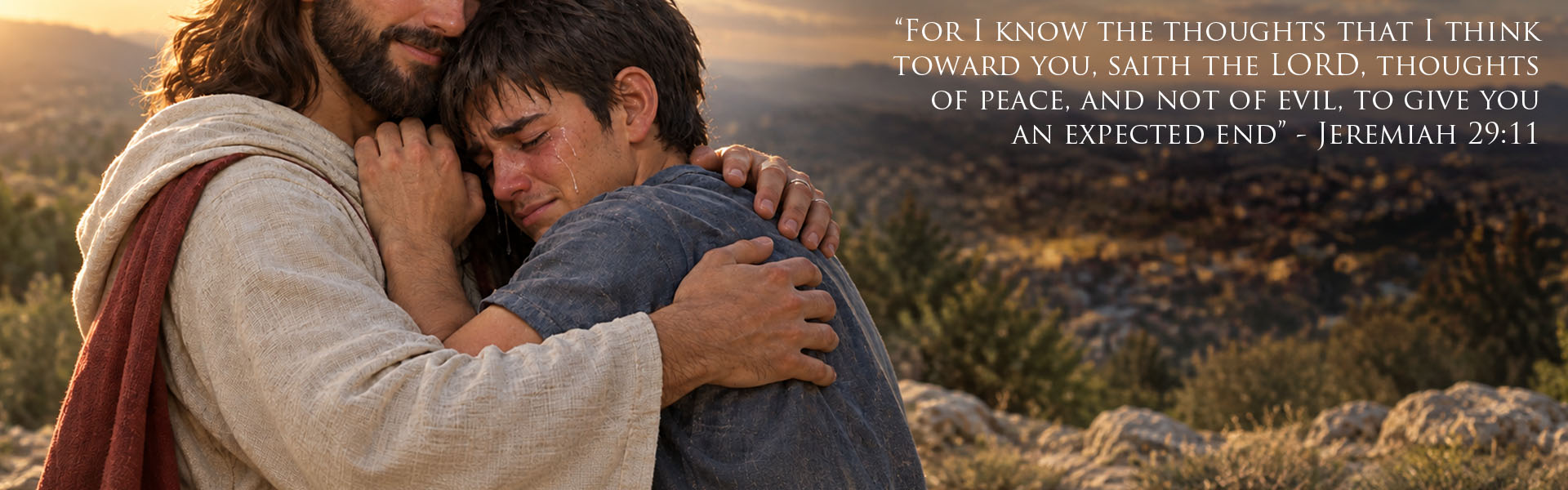
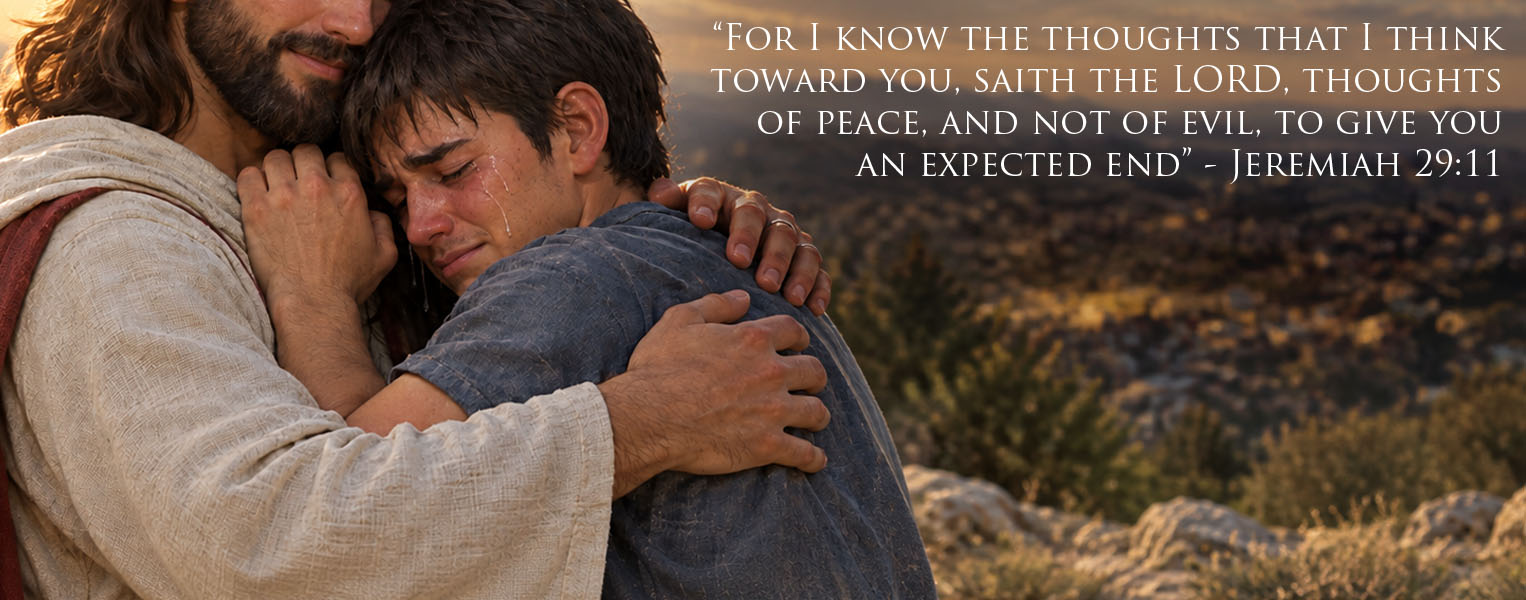
"For I know the thoughts that I think toward you, saith the LORD, thoughts of peace, and not of evil, to give you an expected end" — Jeremiah 29:11
Rest in that. Trust boldly. He is not finished with you yet.